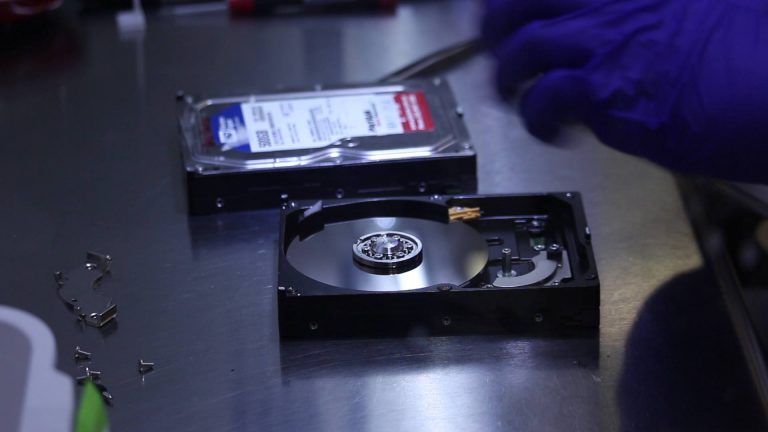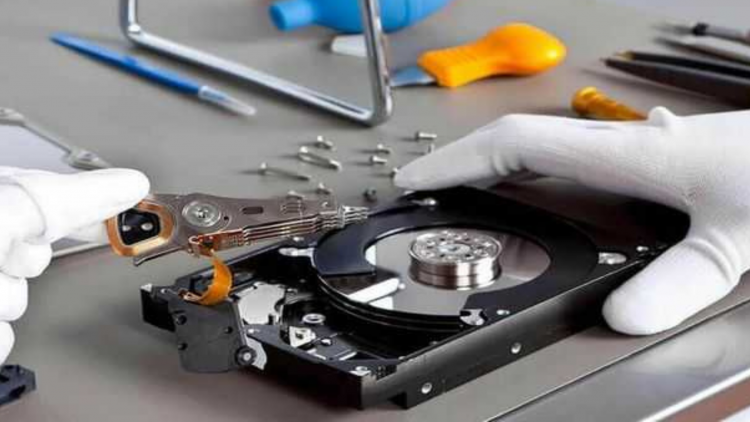
When your USB flash drive has physically failed and typical data recovery methods no longer work, recovering data directly from the memory chip is often the last resort. Although this method can have a high success rate, it comes with significant challenges and varying levels of success. Below, we explore the process of recovering data from the memory chip and the factors that impact its success.
Understanding the Memory Chip in USB Drives
The memory chip is the key storage component in a USB flash drive. There are two primary types of failures that can occur within this chip:
- Natural Degradation of Cell Quality: Over time, as the flash memory undergoes repeated write and erase cycles, its quality deteriorates. Techniques like wear leveling help to delay this wear, but eventually, it leads to Cyclic Redundancy Check (CRC) errors. These errors can affect the quality of data recovery, making the process more complicated.
- Permanent Failure of the Memory Chip: In some cases, the memory chip itself might fail entirely due to internal issues. If the chip suffers permanent failure, recovery becomes extremely difficult, if not impossible. In such cases, no data recovery can be performed.
Reading Data from the Memory Chip:
When performing data recovery directly from the memory chip, there are several hurdles that can impact the success and quality of the recovery:
CRC Errors and ECC (Error Correction Code)
When data is read from the memory chip, CRC errors may arise due to the degradation of the cells. These errors can result in corrupted data that is difficult or impossible to reconstruct. To address this, the Error Correction Code (ECC) is used, which writes additional data to help correct errors and maintain the integrity of the user data.
However, ECC has its limitations:
- The capacity for error correction is fixed, and if the errors exceed the ECC’s ability to correct them, the reconstruction of user data might fail.
- If too many errors are present, the chances of recovering usable data diminish.
Controller Simulation
The data recovery process often involves simulating the controller functions of the USB drive. The controller is responsible for managing how the memory chip stores and retrieves data. If the chip is still usable and the data errors are within a manageable range (less than 50% errors), a controller simulation can reverse the changes made by the controller and facilitate the recovery process.
However, this method is highly dependent on the condition of the memory chip and whether the controller’s actions can be reversed.
Quality of Recovered Data
Even if data recovery from a physical USB flash drive is successful, the quality of the recovered files may be questionable. The extent of errors in the recovered data largely depends on how much error correction was required and how much of the data was affected by those errors.
Potential Issues with Recovered Data:
- Image Files: In the case of images, you might notice artifacts such as a green line across the picture if data errors affected a portion of the image file.
- Smaller Files: The smaller the file size, the more noticeable the effects of errors on the recovered data.
- Unused Data: If the errors affect data that isn’t used by the user (such as background system files), they may have no impact on the recovered files.
Conclusion:
Recovering data from a physically damaged USB flash drive is a complex and challenging process. The success of memory chip data recovery largely depends on the following factors:
- The extent of damage to the memory chip (whether it’s naturally degraded or permanently failed).
- The number of errors encountered during the reading process, and whether those errors can be corrected by ECC.
- The success of simulating the controller’s functions.
While recovery is possible, it’s important to understand that the quality of recovered data may be compromised, especially if a significant amount of errors are present. If the memory chip is severely damaged, professional data recovery services with advanced techniques may offer the best chance for a successful recovery.
About the Author